KYB, the Moto Suspension Giant, Is Building an Inverted Fork for E-MTBs
If you have ridden a motocross bike in the last forty years, you have probably ridden KYB suspension. Now the Japanese giant is pointing that same knowledge at electric mountain bikes — starting with a gold, upside-down, coil-sprung fork.
Who KYB is
KYB Corporation of Tokyo is one of the largest suspension manufacturers on Earth: the company produces more than a million suspension units a week across its factories, and says its Gifu North Plant in Japan is the largest shock absorber factory in the world. Riders know it best from motorcycles — KYB supplies race suspension to the motocross world, where its SSS fork is close to a household name — and drivers know it from the shocks and struts fitted to millions of cars. KYB Americas, its North American division founded in 1974 and headquartered in Indiana, handles automotive shocks and struts in the US. Mountain bikes are new territory: this is the company's first move into the pedal-powered market.
The fork: coil, inverted, and adjustable two ways
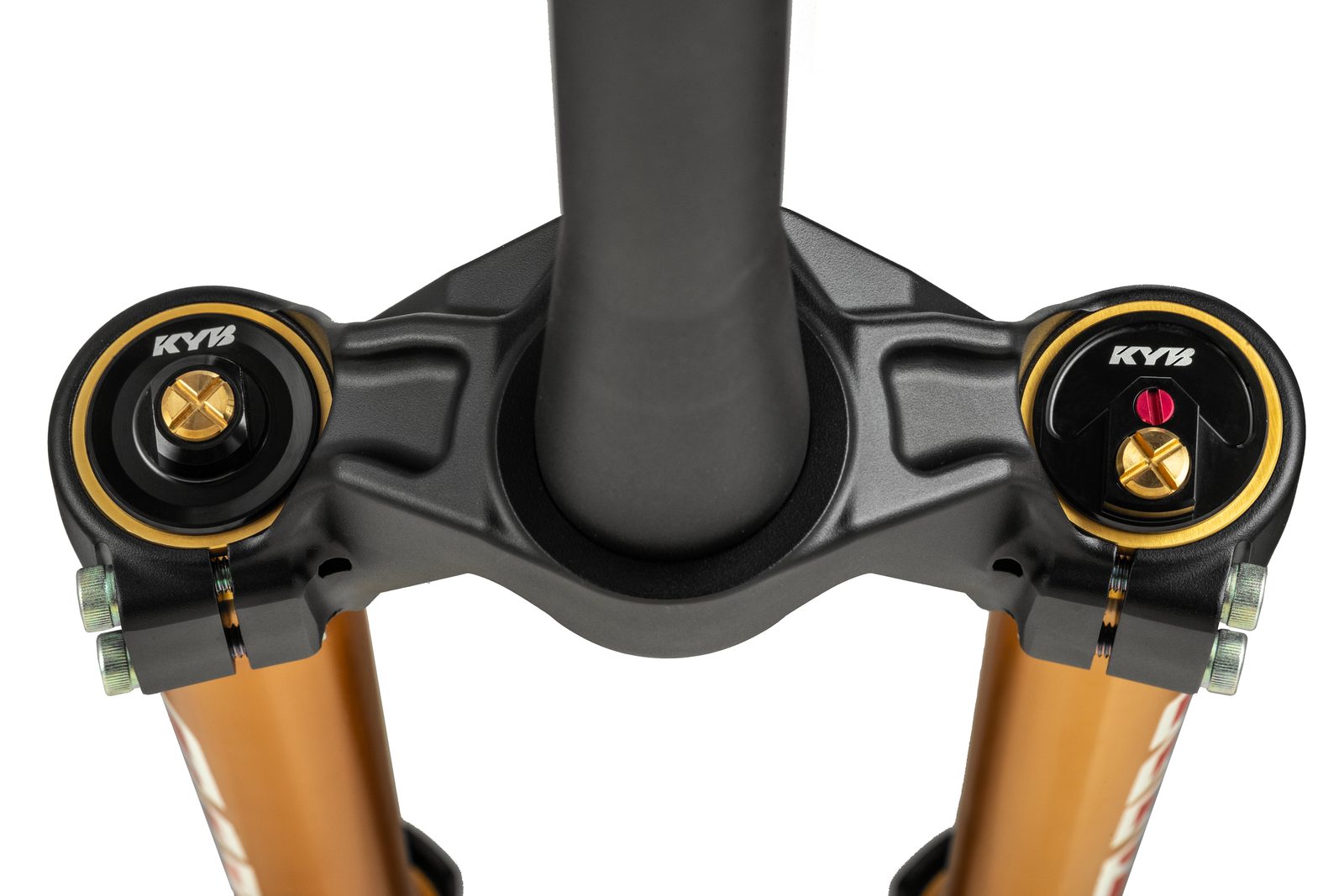
The debut product is an inverted (upside-down) fork with 160 mm of travel, aimed at trail, enduro and e-MTB riders. In an inverted fork the thicker outer legs sit at the top, clamped by the crown, while the slender stanchions run below — the opposite of a conventional Fox or RockShox. KYB's numbers, as reported from its public showings:
- Travel: 160 mm
- Spring: replaceable steel coil spring with air assist, reported adjustable from 6 to 9 PSI, so the spring rate can be tuned to the rider
- Chassis: 32 mm stanchions, 41 mm outer legs, 20 x 110 mm thru-axle
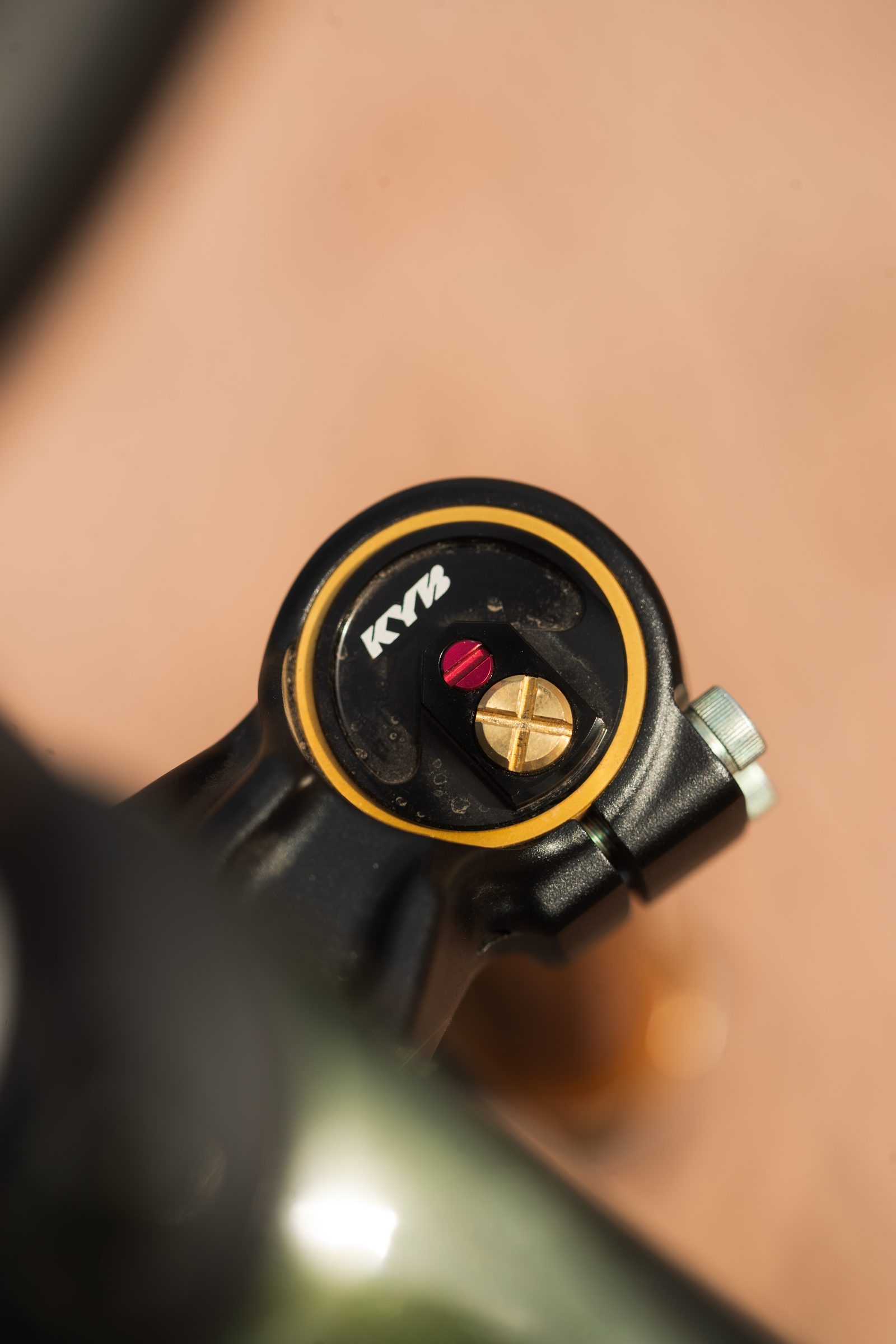
- Damping: motorcycle-style piston slide structure with a proprietary valve system; compression and rebound adjustable, with speed-sensitive damping carried over from KYB's moto forks
- Wheel sizes: one fork fits both 27.5" and 29" wheels — the crowns slide on the stanchions to change the axle-to-crown height
- Claimed weight: 2.85 kg
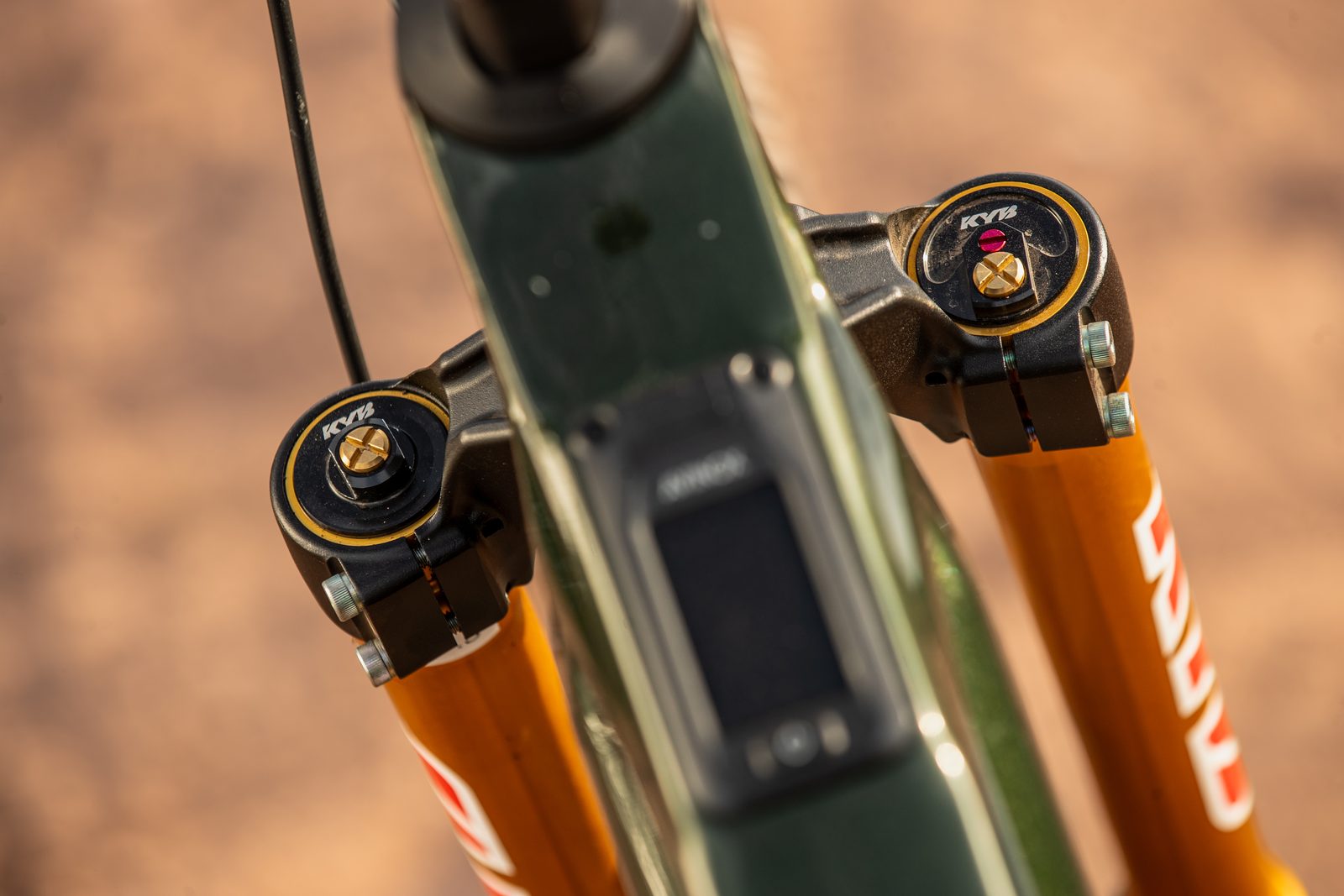
Two details caught reviewers' eyes at the SEMA Show in Las Vegas in early November 2026, where the fork was displayed on a Marin Alpine Trail eMTB. First, the legs clamp into the uppers, which could make service simpler: damage one side and you replace that side. Second, the heavily shaped crown is doing real work — the uppers themselves are skinny compared with other recent inverted forks, which raises the obvious question about stiffness at 160 mm of travel, a figure more commonly paired with bigger stanchions. KYB has not yet explained in detail how the air-assist element works, and no official retail price has been announced.
And a rear shock is coming
A matching coil-sprung rear shock has been shown alongside the fork, with adjustable spring preload and compression and rebound damping. It is a little behind the fork in development, so what has been seen in public may change before production. Prototype testing of the fork has reportedly been carried out by Spanish bike designer Cesar Rojo aboard an Unno Mith.
Europe first, America through bike brands
The fork was teased at Sea Otter Europe in September 2026, fitted to a Propain enduro bike, and KYB Europe is establishing a distribution and service network ahead of a planned European launch from November 2026, with partners already listed in Germany, Switzerland and Austria according to German press reports. For Europe, aftermarket sales to riders look like the starting point.
North America is a different plan. KYB Americas previewed the mountain e-bike suspension platform at SEMA in November 2026, thanking Marin Bikes for the partnership — and according to BikeRumor's report from the show, the current North American plan is OE placements: forks fitted to new bikes at the factory, with Marin the obvious early partner, while aftermarket distribution talks continue. There is no announced US price, no US launch date, and nothing about the MTB products on KYB's US website yet.
Why it matters for e-MTB riders
Inverted forks have stayed rare in mountain biking for good reasons — weight, cost, and stiffness questions — with only a handful of brands like Intend, Cane Creek and Fox's Podium keeping the idea alive. What KYB brings that none of them can match is scale: a manufacturer that already builds suspension by the million, with decades of damping knowledge from the hardest discipline in off-road racing. On an e-bike, where a motor and battery already set the weight budget, a 2.85 kg coil fork is a much easier trade than on a 13 kg trail bike — and coil sensitivity plus moto-bred damping is exactly what heavy, fast e-MTBs reward.
The honest caveats stand: no price, no independent ride reviews, a rear shock still in development, and a stiffness question that only real-world riding will answer. But a well-resourced new competitor entering suspension is good news for every rider — competition is what pressures the established brands on price and availability. We will update this article when KYB announces pricing or North American availability.
Learn more
Read more about KYB's e-MTB suspension program at KYB Europe — and keep an eye on this space as the fork moves from show floors to shop floors.
Visit KYB Europe MTB →Frequently asked questions
Can I buy the KYB mountain bike fork?
Not yet. KYB planned a European launch from November 2026 with a distribution and service network being established, but no official retail price has been announced. In North America the current plan is to supply forks fitted to new bikes from the factory, not to sell them directly to riders.
What are the KYB e-MTB fork specs?
160 mm of travel, a coil spring with air assist, inverted construction with 32 mm stanchions and 41 mm outer legs, a 20 x 110 mm thru-axle, adjustable compression and rebound, replaceable coil springs, and adjustable axle-to-crown height so the same fork fits 27.5-inch and 29-inch wheels. Claimed weight is 2.85 kg.
Will KYB sell MTB suspension in the USA?
KYB has a North American division, KYB Americas, but its business is automotive suspension. For mountain bikes, the current North American plan reported in November 2026 is OE placements — forks fitted to new bikes at the factory, with Marin Bikes as an early partner — while aftermarket distribution talks continue. No US date or price has been announced.
Is there a KYB rear shock too?
Yes, a coil-sprung rear shock with adjustable preload, compression and rebound is in development, but it is behind the fork and what has been shown publicly may change before production.
Why an inverted (upside-down) fork?
In an inverted fork the thicker outer legs sit at the top and the slender stanchions run below, which reduces unsprung weight and keeps the sliding seals better lubricated. The trade-off is usually more weight and open questions about stiffness, which is why inverted forks have stayed rare in mountain biking.